 |
|
Welcome Collectors!! Royal Albert China - Reference Website |
Search Google for Royal Albert China
|
Lawleys
Edgar E Lawley (1889 - 1977) was a successful businessman and
philanthropist renowned for his chain of china
and glassware shops,
"Lawley's of Regent Street".
He was also Chairman of St. Mary's Hospital Medical School; a member of the General Council of the King Edward's Hospital Fund for London and a member of the Governing Council of Imperial College.

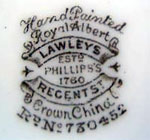
Reg. # 730452
Reg. # 730452
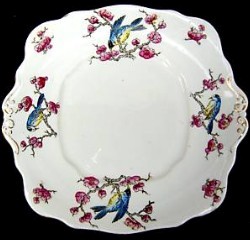
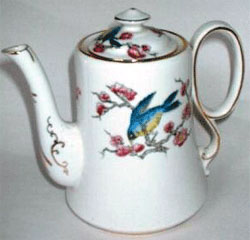
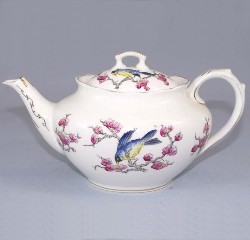
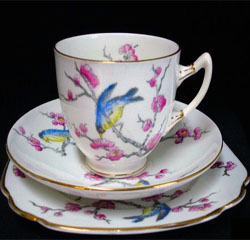
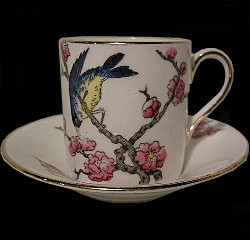
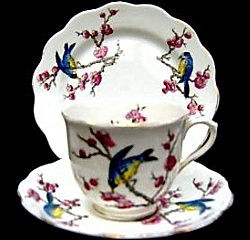
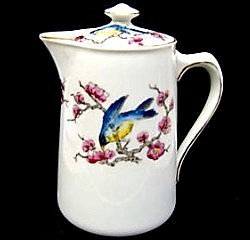
Bognor
EST 1927 to 1935


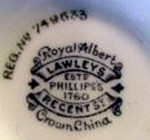
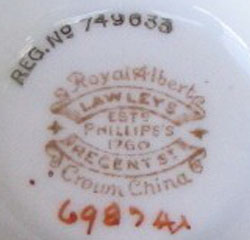
Reg. Nº 749633
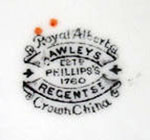
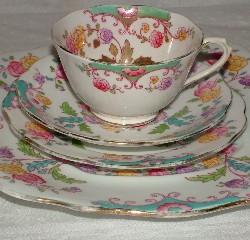
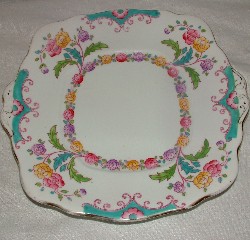
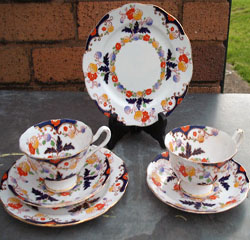
Greenwood Tree

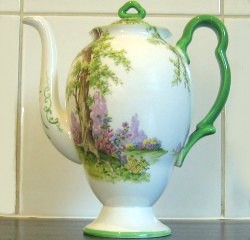
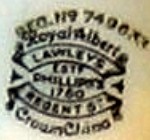
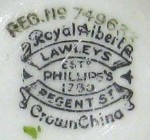
EST 1927 to 1935
Reg. Nº 749633
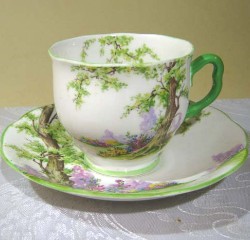
Hawthorn
EST 1927 to 1935

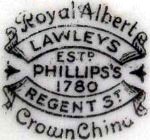

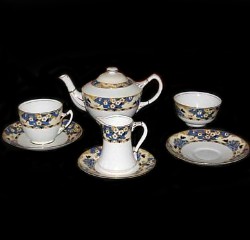
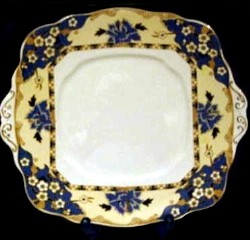
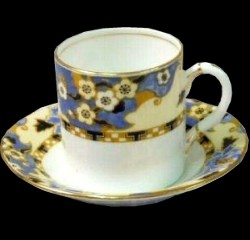
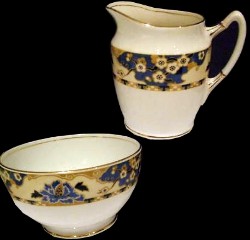
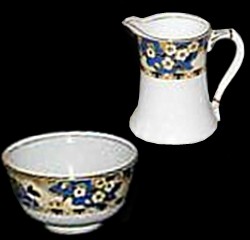
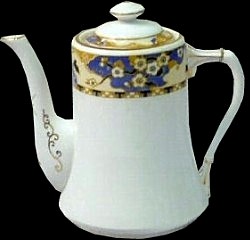
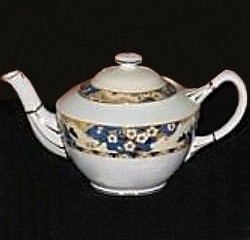
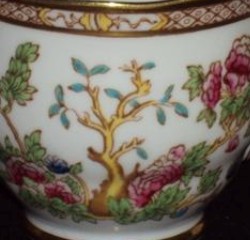
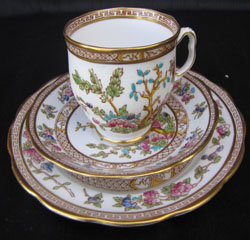
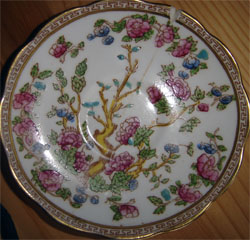
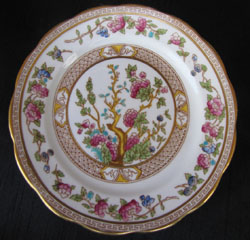
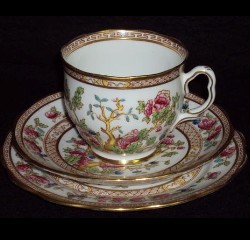
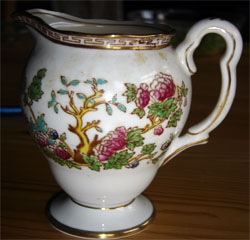
Indian Tree Pattern
EST 1927 to 1935
Indian Tree is a china pattern that was popular during the last half of the nineteenth century. It was copied from earlier Indian textile patterns that were very similar. The pattern includes the crooked branch of a tree and a partial landscape with exotic flowers and leaves. Green, blue, pink, and orange were the favored colors used in the design.

June Pattern
EST 1927 to 1935
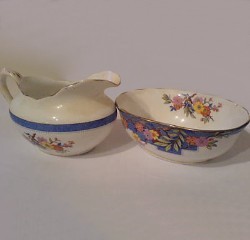
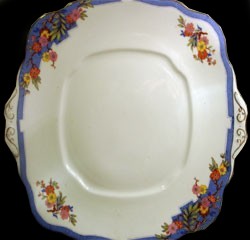
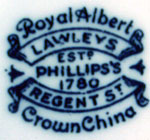
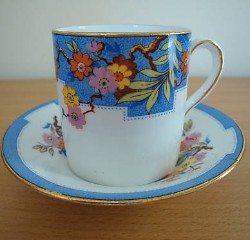
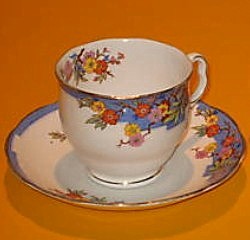
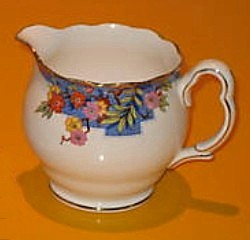
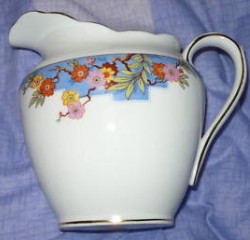
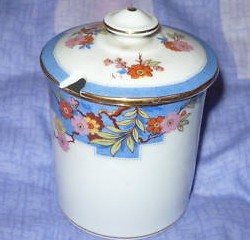
Devon and Lovain


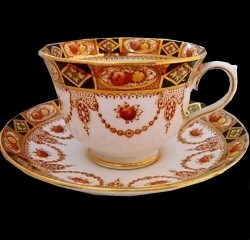
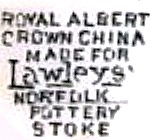
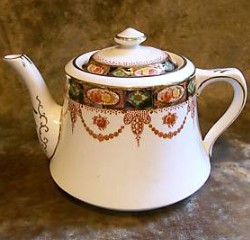
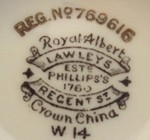
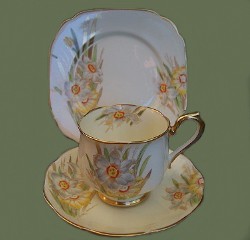
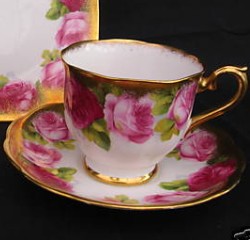
Old English Roses
EST 1927 to 1935

Orient
EST 1927 to 1935
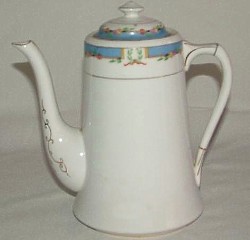
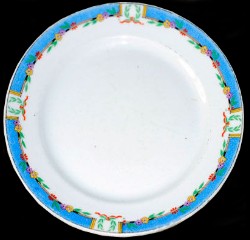
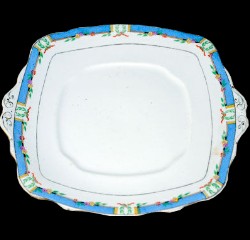
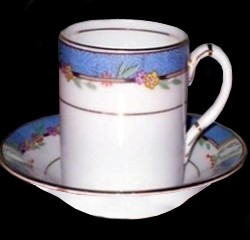
Un-Named
EST 1927 to 1935
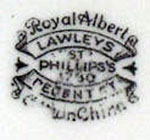
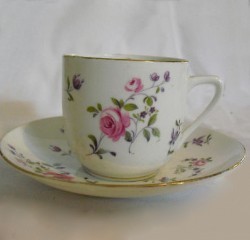
Un-Named
EST 1927 to 1935
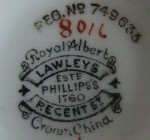
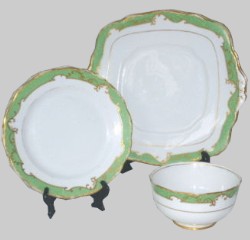
Un-Named
EST 1927 to 1935
Reg. Nº 749633
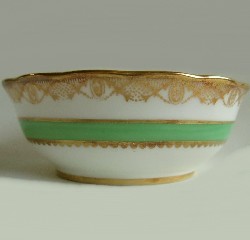
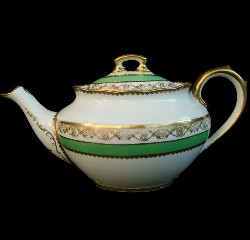
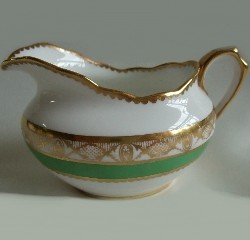
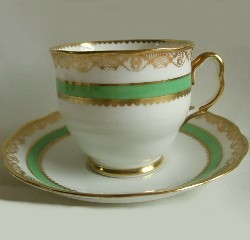

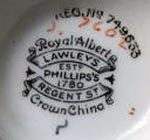
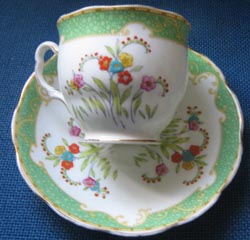
Un-Named
EST 1927 to 1935

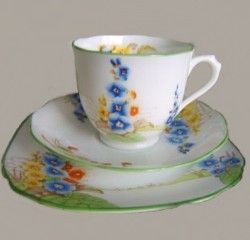
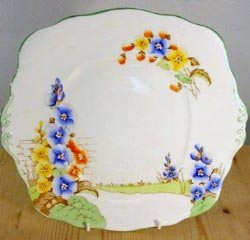
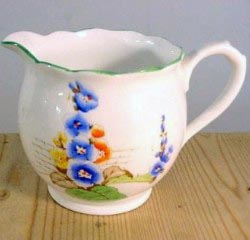
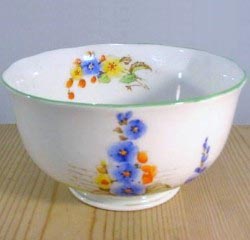
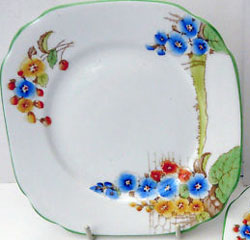
Un-Named
EST 1927 to 1935
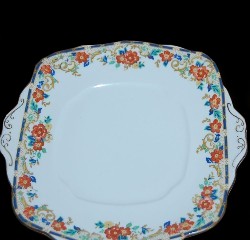
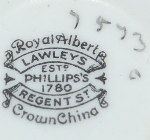
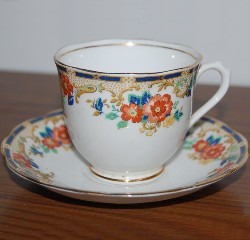
Un-Named
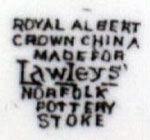
EST 1927 to 1935
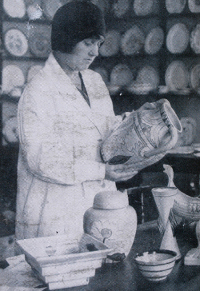
A grainy black and white photograph shows Clarice Cliff examining the pattern on an ‘Inspiration’ vase. She is dressed in a white technician’s coat, with a dark skull cap pulled low on to her forehead. This was the ‘brilliant young girl artist’ who had come to the attention of the press two years earlier with a design of tableware whose patterns and colouring were as startling as their name. Each piece of ‘Bizarre’ was stamped with Clarice Cliff’s signature and found immediate favour with women who responded to the modern spirit of her work. Clarice Cliff’s work was different, at a time when women hoped their lives would be different too. Early sales of ‘Bizarre’ coincided with the achievement of universal female suffrage; Clarice Cliff spoke to the possibilities of that moment. ‘Colour combined with novel decorative designs made an instant appeal to the middle-class housewife,’ the Daily Sketch reported; Woman’s Life was all the more insistent: ‘Women simply clamoured for this new pottery.’
Now, the London branch of Lawley’s department store in Regent Street was opening its doors to a demonstration of the tableware responsible for Clarice Cliff’s success. From Monday to Saturday, ten-thirty am to five-thirty pm, members of the public watched Clarice Cliff and her young paintresses demonstrate the various stages of hand-decoration: saw enamel wisps of smoke rise from cottage chimneys, watched everlasting flowers bloom in tangerine and coral paint. Though not the first of Clarice Cliff's public demonstrations, the week at Lawley’s was significant. By now, her name was sufficiently well known that an invitation to meet her drew the public, while the central location of the London store attracted the national press. Noting that the event was ‘visited by a number of connoisseurs’, the Daily Telegraph observed that ‘its results certainly go far in ... enlivening the aspect of the modern table,’ but it was the Daily Mirror’s more emotional response which captured a major element of Clarice Cliff’s press appeal when she was introduced as ‘one of the romances of the pottery trade’. Here was a woman who ‘only a few years ago’ had been ‘a humble little gilder in a china factory’. Now she was a newsworthy designer. ‘No movie star can tell a more romantic story of “How I Was Discovered”.
Royal Albert China Series |
 |
 |
|||
 |
 |
 |
 |
 |
 |
 |
 |
 |
 |
 |
 |
 |
 |
 |
 |
 |
 |
 |
 |
 |
 |
 |
 |
 |
 |
 |
 |
|
 |
 |
 |
 |
 |
 |
 |
 |
 |
 |
 |
 |
 |
 |
 |
 |
 |
 |
 |
 |
 |
 |
 |
 |
 |
 |
 |
 |
 |
 |
 |
 |
 |
 |
 |
 |
 |
 |
 |
 |
 |
 |
 |
 |
 |
 |
 |
 |
 |
 |
 |
 |
 |
 |
 |
 |
 |
 |
 |
 |
 |
 |
 |
 |
 |
 |
 |
 |
 |
 |
 |
 |
 |
 |
 |
 |
 |
 |
 |
 |
 |
 |
 |
 |
 |
 |
 |
 |
 |
 |
 |
 |
 |
 |
 |
 |
 |
 |
 |
 |
 |
 |
 |
 |
 |
 |
 |
||
The pages Below are Patterns that were released in several different colors and cup shapes, they are not an official series. |
|||||
 |
|
 |
 |
 |
 |
 |
 |
 |
 |
 |
 |
 |
 |
 |
 |
 |
|
Special Collections The Patterns on these pages are not in an official series, but that they would go nicely together or have the same shape. |
|||||
 |
 |
|
 |
 |
 |
 |
 |
 |
 |
 |
 |
 |
 |
 |
 |
 |
 |
 |
 |
 |
|
 |
|
"All Patterns" Named Patterns All the Named patterns are listed on the pages below in alphabetical order. |
|||||
 |
|
 |
|
 |
 |
|
|
|
|
 |
|
 |
 |
|
 |
 |
 |
 |
 |
 |
 |
 |
 |
 |
|||||